|
translate
to
Chinese
Japanese
Spanish
French
General
Information |
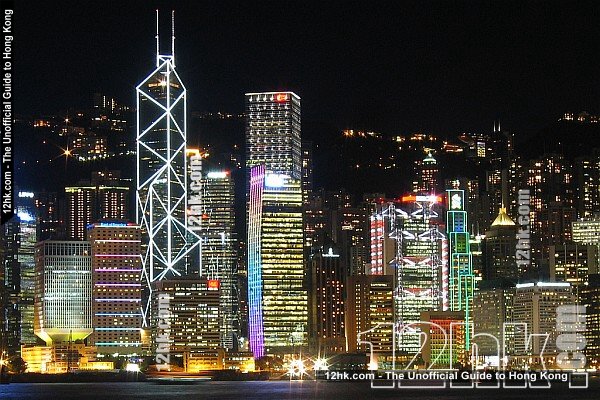
 Above:
Central district on Hong Kong Island seen from across the Victoria harbor in Tsim
Sha Tsui during the Symphony of Lights laser show. |
|
Located
at the southeast coast of China, the size of Hong Kong is about 400 square miles
(~1,000 sq km) but it is growing! No, not from the shrinking of the ocean caused
by El Nino, nor from conquering neighboring cities, but from the reclamation of
land. The new airport is one good example. |
|
Hong
Kong has about 6.9 million people, give or take 500 thousand - all depending on
how many tourists are here! When you are in places like Mongkok
or Causeway Bay,
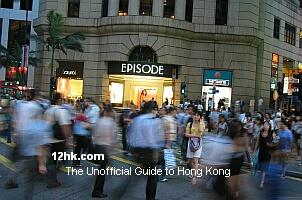
you would think that the whole population of Hong Kong is there. (Left:
a pedestrian crossing in Central
district.) (note:
HK had 25 million visitors in year 2006, and let's say that on
the average each stays 1 week.) |
|
Hong
Kong is made up of the Hong Kong Island, the Kowloon Pennisula, and the New Territories,
with Hong Kong Island being the smallest of the three but where the central business
district is located (aptly named Central).
Now if you look up an atlas, you may see Victoria shown as the capital or key
city. Good luck in finding it! You are too late - by perhaps 100 years. There is no Victoria any more. There is just a Victoria
Harbor separating Hong Kong Island and Kowloon, and a Victoria Peak. |
|
The south side of the Hong Kong island is known for its beaches and is where some
of the wealthy live. Repulse Bay is
probably the most famous beach there (its Chinese name means shallow water bay).
The
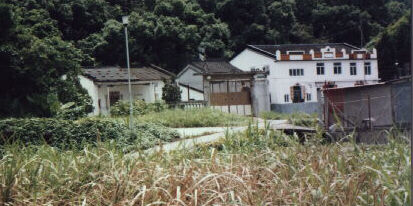
New Territories are the countryside of Hong Kong (or at least they used to be),
where there are still villages little known to tourists. But you have to know
where you are going before you can find them. |
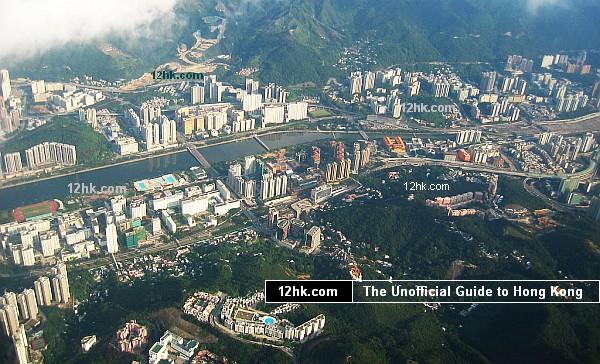
 Above: a bird's eye view of Shatin in the New Territories. Shatin used to be a village but is now a sizable town complete with a mall and many large residential complexes. |
| Related
Pages |